 Balls.com – Index of Balls used in Sporting Games and Events Sports balls specifications and rules. All levels of organized play.
Balls.com discusses the rules that govern balls used in many sports around the world. We provide an index of sports that require balls in order to play. For each of these sports, we have researched the rules that govern the size, shape, color, weight, constructions, markings, pressure and other characteristics of the balls. Many of the sports have governing bodies that set these rules – sometimes for very specific levels of play. For example, the basketballs used at the high school level are different than the basketballs used in the NBA. We try to provide information for different levels of play. Other sports are more relaxed and do not have separate rules for different levels of play. From our research, you will learn of balls used in sports played indoors, balls used in sports played outdoors and balls used in sports that can be played in both. Some of the sports are better known as recreational games, while others are viewed as competitive. Over time, we hope to expand our categories to include interesting facts about balls.
Read More »International Skittles: The European Game
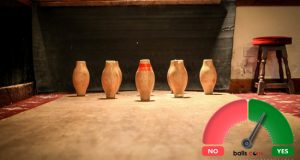
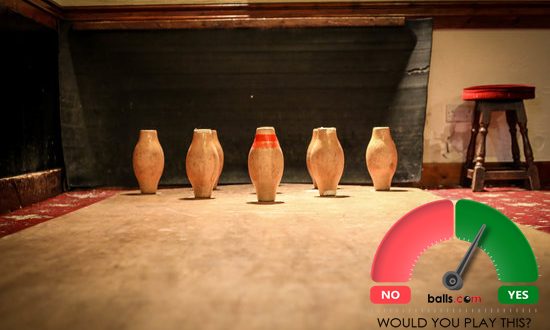
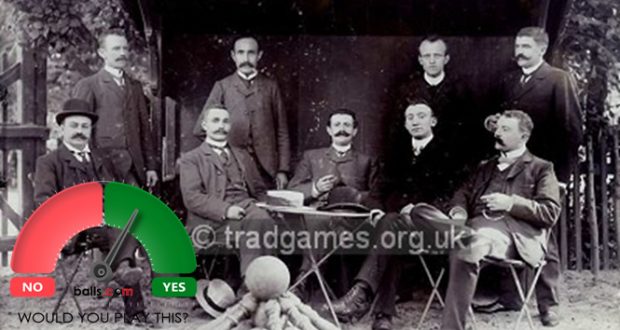
While greatly popular in England, skittles is also played with various versions throughout Europe. These countries have a strong history of this lively game.
Read More »Skittles: Older than the Candy
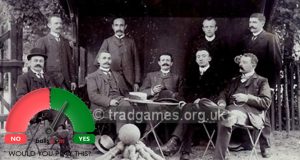
A popular regional version of the game Skittles, which much resembles bowling, is known as Old English Skittles. Originating in the Greater London area, Old English Skittles uses nine pins and a cheese. A cheese is disc shaped, ranging from 8.5 to 12 inches in diameter and made from very heavy wood.
Read More »Ready, Aim, Fire
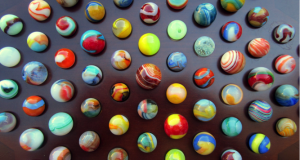
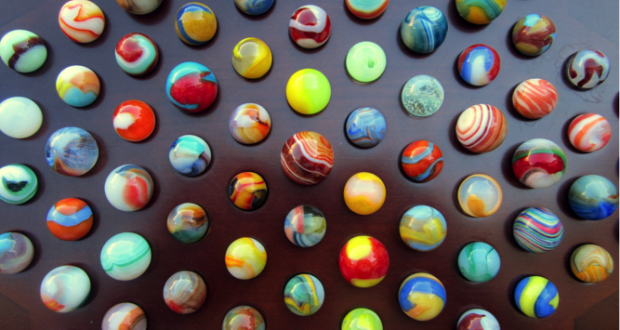
In a slight variation of the classic game, players stand at a setline and take turns flicking their marbles towards a hole. In the traditional game, the players each have 10 marbles, and the goal is to have the most marbles in the hole.
Read More »Disney Gives Life to Lewis Carroll’s Croquet Match
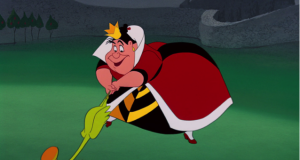
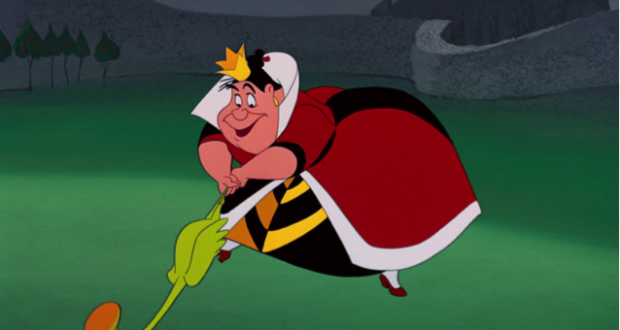
In 1951, Disney adapted Lewis Carroll’s Alice in Wonderland into a movie by the same name. A naïve girl named Alice falls down a rabbit hole into a whole new world, characterized by bizarre creatures, talking animals, and even stranger customs. One such tradition is the Queen of Heart’s game of croquet, with flamingos for mallots, human cards for hoops, and live hedgehogs for balls.
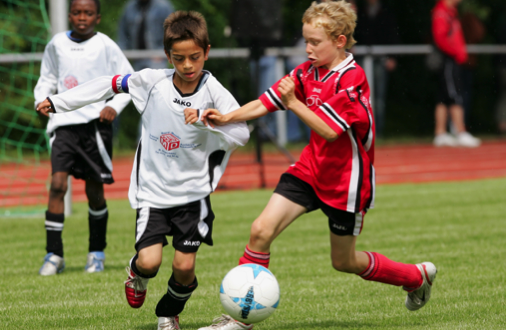
Read More »Smaller Soccer Balls for Youngsters
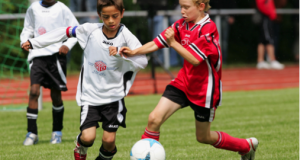
The United States Youth Soccer Association has set the rules for ball size and weight, and follows FIFA rules for material and other regulations.
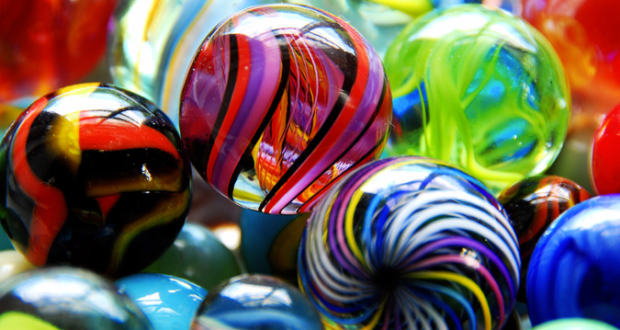
Read More »Don’t Lose Your Marbles
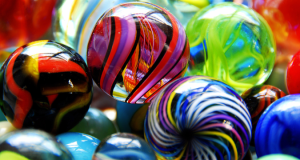
Although somewhat smaller than most balls, marbles share the same spherical shape, and are a classic pastime. No one knows where they originated, but marbles have nonetheless evolved from simple stones in Egyptian times to artisan and industry crafted spheres.
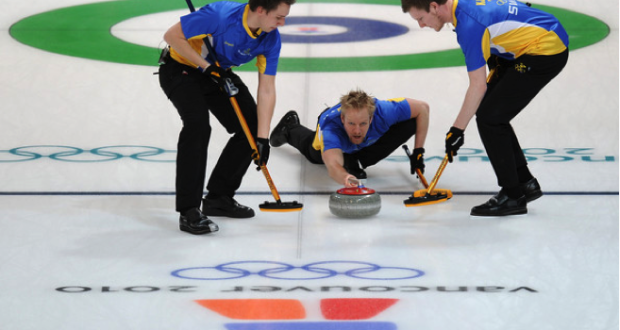
Read More »Curling, Not Just for Hair
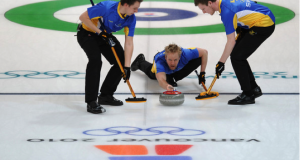
Being a solid, oval rock thrown down the ice, the curling rock/stone serves as the ball in this winter-inspired sport. Believed to have originated as an enjoyable pastime of throwing stones over ice during a harsh Northern European winter, curling is now played world-wide at all levels of recreation and competition.
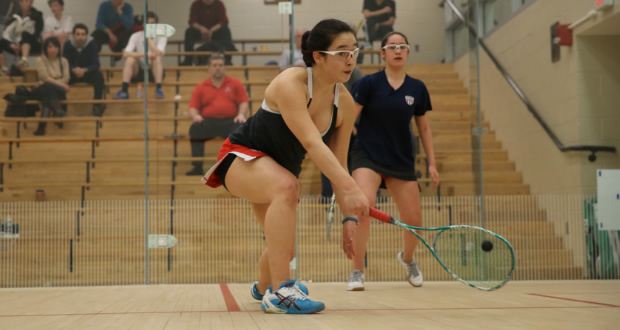
Read More »US Squash Sets Rules for the Handling of the Ball
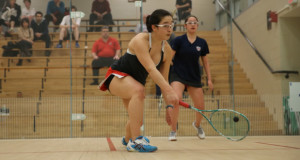
US Squash is the national governing body and membership organization for the sport of squash in the United States. It acts to increase participation in squash at all ages and to build awareness of the sport. The organization represents urban, junior and high school squash, college squash, accredited (sanctioned) tournaments and leagues, professional squash, coach and referee certifications, national championships and national teams.
Read More »Game Using Virtual Ping Pong Balls
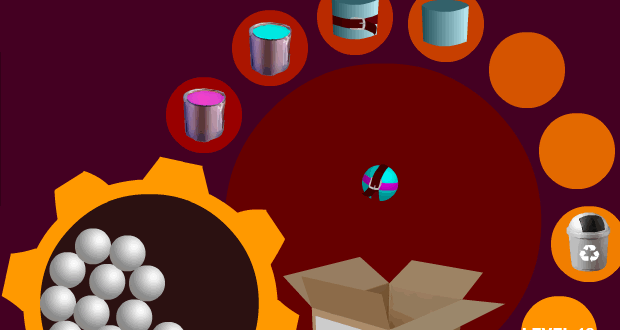
Factory Balls 2, an online logic game, uses virtual ping-pong balls and challenges you to duplicate patterns. You are shown a picture of a ball decorated with a design. You are given a number of tools such as buckets of paint, belts, sunglasses, seeds, water and spray paint. The object of the game is for you to reproduce the pattern by determining the correct sequence of steps and the correct tools.
Read More »Pickleball for the Whole Family
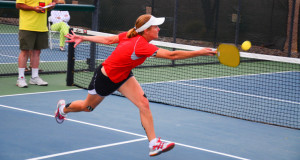
Started one summer in 1965 when no one could find a shuttlecock to play badminton, Pickleball got its start using a whiffle ball, a low-set badminton net and solid paddles made of wood. A badminton court and tennis-like rules were combined for this ad hoc family game to be played with two to four players.
Read More »